We have a mystery for you to help solve!
I got an email from Mr Ray Byrne, a native of Conche on the Northern Peninsula, now living in Edmonton. He is trying to find the words to a recitation his father used to do.
"My father's name was Jim Byrne and he worked on Bell Island in the early part of the 20th century," says Ray. "I mention this because I wonder if that's where he found it and if so there may be a possibility that someone out there is familiar with it."
Jim Byrne's title for the recitation was "The Trawler". Some of the lyrics his son remembers are:
(OPENING VERSE)
Now the capelin have struck the beach
And the time has come for spawning
See the trawler there with his oilskins on
He's been there since the dawning
Aw, he says, it's fishin' I'll give up
And I'll go berry pickin'
I'll sell them and get the cash
And it's the merchants I'll be trickin'
There is also a mention of Baccalieu in one line, according to Ray. If you have any thoughts, or know the piece, comment here, or email your friendly neighbourhood folklorist at ich@heritagefoundation.ca

Tuesday, June 29, 2010


Wednesday, June 23, 2010
Job Posting: Preservation Advisor

The individual selected to carry out this project will perform duties as
follows:
- Inquiries: responding to member inquiries by phone and arranging follow up consultations (69 hours)
- Site Visits: it is anticipated that there will be visits to central Newfoundland, as well as locations in the St. John's area. Time spent in each location will be subject to member needs (105 hours)
- Administration: Preparing reports, gathering statistics and meeting with Professional Development and Outreach Officer and ANLA Executive (5hours)
- 'Blog Updates: Providing useful information and references, based on incoming inquiries, through use of ANLA's archival 'blog (10 hours).
- PDO (Professional Development Officer) Assistance: Providing training to the PDO for responding to future inquiries from member institutions about preservation needs (10 hours).
The successful applicant will have graduated from a recognized conservation training program and will have a background in preventative conservation and in the treatment and handling of a variety of paper and digital media. Experience in working with community groups would be an asset. A driver's license would also be an asset.
The position will run for 199 hours, these hours to be allocated by the ANLA executive in consultation with the preservation advisor.
The successful candidate will be expected to work independently from home and report on a regular basis to the ANLA executive.
The competition closes on July 2, 2010.
Please submit applications to the ANLA office (address below) or via email at anla@nf.aibn.com .
Association of Newfoundland and Labrador Archives
P.O. Box 23155
St. John's, NL
A1B 4J9
Tuesday, June 8, 2010
Storytelling, Digital Media, and Intangible Cultural Heritage - June Update

In this month's edition of Newfoundland and Labrador's ICH Update, SmartLabrador and its project partners launch a CD of stories and songs entitled Between the Wind and the Wave; the community of Rigolet is in the process of creating the My Word: Storytelling and Digital Media Lab, the first Northern centre in the world dedicated to using digital media and storytelling to share information about Inuit culture, history, and lifestyle through personal narrative; we release a sample tape log form for people indexing and transcribing oral history interviews; updates on the Digital Archives Initiative; and Storytellers of Canada-Conteurs du Canada announce a scholarship for young storytelling enthusiasts in Newfoundland and Labrador.
Download the newsletter in pdf format at: http://tinyurl.com/26x5rp3
Thursday, June 3, 2010
Sample Tape Log Form for Folklore and Oral History Interviews
Earlier this week, I had a conversation with a historical society. The group is planning on digitizing and organizing some old taped interviews. When they said they didn't really know what was on the tapes, I suggested a good place to start might be with a Tape Log for each tape. Basically, a tape log is an index of topics that the interview covers. It is easier than doing a full transcription, and makes it easier for later researchers to go directly to that section of tape and listen to the part of the interview they are interested in.
"With this tape log, you will later be able to go back and select portions of the tape to listen to and transcribe (word-for-word translation of the tape-recorded interview). Complete tape transcriptions are important, but they are also very time-consuming. A good compromise is to do a combination of logging and transcribing: log the general contents of the tape and transcribe, word for word, the parts that you think you might want to quote directly."
- taken from "The Smithsonian Folklife and Oral History Interviewing Guide" available online at:
http://www.folklife.si.edu/education_exhibits/resources/guide/introduction.aspx
While you can certainly do this with tapes themselves, digitizing the material makes things easier in today's digital age. It is also helpful from a conservation perspective.
"I'd digitize first and work with the digitized copies," says Mary Ellen Wright, Professional Development and Outreach Officer with ANLA. "That would be better from a preservation perspective -- save wear and tear on the original tapes."
We've developed our own version of a tape log form, based on the example given by the Smithsonian. The forms can be downloaded, along with other sample forms such as consent forms, at:
http://www.mun.ca/ich/resources/
Or you can download the pdf version directly at:
http://www.mun.ca/ich/resources/TapeLogFolkloreInterviews.pdf
Or the word document version directly at:
http://www.mun.ca/ich/resources/TapeLogFolkloreInterviews.rtf
The US-based Veterans History Project has a similar form on its website at:
http://www.loc.gov/vets/forms.html
"With this tape log, you will later be able to go back and select portions of the tape to listen to and transcribe (word-for-word translation of the tape-recorded interview). Complete tape transcriptions are important, but they are also very time-consuming. A good compromise is to do a combination of logging and transcribing: log the general contents of the tape and transcribe, word for word, the parts that you think you might want to quote directly."
- taken from "The Smithsonian Folklife and Oral History Interviewing Guide" available online at:
http://www.folklife.si.edu/education_exhibits/resources/guide/introduction.aspx
While you can certainly do this with tapes themselves, digitizing the material makes things easier in today's digital age. It is also helpful from a conservation perspective.
"I'd digitize first and work with the digitized copies," says Mary Ellen Wright, Professional Development and Outreach Officer with ANLA. "That would be better from a preservation perspective -- save wear and tear on the original tapes."
We've developed our own version of a tape log form, based on the example given by the Smithsonian. The forms can be downloaded, along with other sample forms such as consent forms, at:
http://www.mun.ca/ich/resources/
Or you can download the pdf version directly at:
http://www.mun.ca/ich/resources/TapeLogFolkloreInterviews.pdf
Or the word document version directly at:
http://www.mun.ca/ich/resources/TapeLogFolkloreInterviews.rtf
The US-based Veterans History Project has a similar form on its website at:
http://www.loc.gov/vets/forms.html
Monday, May 31, 2010
Student Job Posting: Archival Interviewer

Admiralty House Museum and Archives, Mount Pearl
9 week summer position, minimum wage. Must be student returning to school in the fall.
Duties: Collect, transcribe and add interviews to archival collection, catalogue Mount Pearl archives, collect and host community event interviews on CICQ Tourism Radio 92.3fm, perform summer student duties such as guided tours, opening and closing site, and site maintenance.
Please apply by sending resume to info@admiraltymuseum.ca
Thursday, May 27, 2010
"Buy a broom in May, and you will sweep your family away."
 |
| Mr Heber Heffern of Salvage "running" a birch broom. |
A brochure printed by the government of Newfoundland and Labrador in 1955, titled "Historic Newfoundland and Labrador" included buying a broom in May in a list of things thought to bring bad luck. The belief is an old one, and not specific to Newfoundland; folk beliefs about brooms are found in many places. The 1873 Folk-Lore Record [I. 52] included this English belief:
The old gentleman‥strictly forbade green brooms being used in his house during the month of May, and, as a reason for the prohibition, used to quote the adage—‘If you sweep the house with broom in May, You'll sweep the head of that house away’.
According to Punjabi folk belief, “care is taken to see that no broom remains lying anywhere in that room [where a child is born] because it will sweep off all the luck of the newborn baby.”
Are you familiar with this tradition in Newfoundland? If so, which communities had that folk belief? Leave a comment!
Links:
http://ngb.chebucto.org/Articles/folk-lore.shtml
http://crimsonwolfe.tripod.com/id26.html
Wednesday, May 26, 2010
Folksongs and Folk Revival at the Water Street Book Club

Anna holds a Ph.D in folklore from Memorial University, and this book looks at one of the most famous collections of Newfoundland songs, the three volume work "Songs of the Newfoundland Outports". Kenneth Peacock collected the songs over six years on behalf of the National Museum of Canada. Folksongs and Folk Revivial provides a critical review of Peacock's Newfoundland fieldwork to understand better his motivations for creating Outports and his treatment of the materials he collected.
Anna is also bringing some of Peacock's actual recordings to share with the audience. Copies of the book for sale at the Water Street Heritage Shop as well.
309 Water Street, second floor
7:00 p.m. Thursday, May 27th.
Friday, May 14, 2010
Gravel Pit Camping and Newfoundland Culture?
It's the 24th of May and we likes to get away
Up in the woods or going out the bay
There's all kinds of places but the place we likes to get
Is up on the highway in the gravel pits
Recorded by: Buddy Wasisname and the Other Fellers
Written by: Wayne Chaulk
http://www.buddywasisname.com
The May long weekend is fast approaching, which means the ongoing debate over the legality of gravel pit camping is back in the news. I woke this morning to CBC radio’s interview with one MHA, and the idea was mentioned, again, that camping in a gravel pit is part of Newfoundland’s culture.
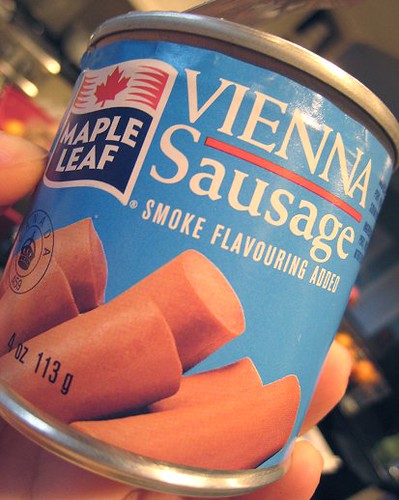 Well, a quick internet search reveals gravel pit camping aficionados in Alaska, Oregon, Maine, Russia, Sweden and Venezuela! So while it may be part of local culture, it seems it is something that is not unique to here. I’m not sure how readily available Vienna sausages are in Venezuela, however…
Sound like a thesis topic for a future folklore graduate student? Here are a few articles to get you started:
Bates, Wanda
Summer in the pits [re gravel pit camping]
Canadian Geographic, July/August 2003, Vol. 123(4), pp. 100-101.
Collins, David N.
Foe, Friend and Fragility: Evolving Settler Interactions with the Newfoundland Wilderness
British Journal of Canadian Studies, May 2008, Vol 21(1), pp. 35-62.
Furlong, Jim
Rain, fog and Vienna sausages
Newfoundland Herald, May 18-24 2003, Vol. 58(20), p. 36
Ruby, Winston
Gravel pit camping Labour Day weekend, Sept. 3, 1984
TickleAce, Spring - Summer 1986, (12), pp. 55-57.
Young, Ron
Gravel pit camping [and gov't. policy]
Downhomer, April 1997, Vol. 9(11), pp. 29-30.
Up in the woods or going out the bay
There's all kinds of places but the place we likes to get
Is up on the highway in the gravel pits
Recorded by: Buddy Wasisname and the Other Fellers
Written by: Wayne Chaulk
http://www.buddywasisname.com
The May long weekend is fast approaching, which means the ongoing debate over the legality of gravel pit camping is back in the news. I woke this morning to CBC radio’s interview with one MHA, and the idea was mentioned, again, that camping in a gravel pit is part of Newfoundland’s culture.
Sound like a thesis topic for a future folklore graduate student? Here are a few articles to get you started:
Bates, Wanda
Summer in the pits [re gravel pit camping]
Canadian Geographic, July/August 2003, Vol. 123(4), pp. 100-101.
Collins, David N.
Foe, Friend and Fragility: Evolving Settler Interactions with the Newfoundland Wilderness
British Journal of Canadian Studies, May 2008, Vol 21(1), pp. 35-62.
Furlong, Jim
Rain, fog and Vienna sausages
Newfoundland Herald, May 18-24 2003, Vol. 58(20), p. 36
Ruby, Winston
Gravel pit camping Labour Day weekend, Sept. 3, 1984
TickleAce, Spring - Summer 1986, (12), pp. 55-57.
Young, Ron
Gravel pit camping [and gov't. policy]
Downhomer, April 1997, Vol. 9(11), pp. 29-30.
Thursday, May 13, 2010
Podcast & Video - Jerome Canning makes a sculling oar

I spoke with Jerome about the sculling oar he was working on at the Sheraton Hotel Newfoundland. In the podcast, Jerome describes what a sculling oar is, and how he is making it.
You can listen to a streaming audio version of the interview here:
Or you can download the podcast in MP3 format from:
http://www.archive.org/download/MakingAScullingOar/JeromeCanningMay13_2010.MP3
I have placed a very short video clip on YouTube of Jerome using a spokeshave to thin down the handle of the oar. You can see that video at:
http://www.youtube.com/watch?v=wGWk-JA4we4
or check out the embedded video here:
Subscribe to:
Posts (Atom)